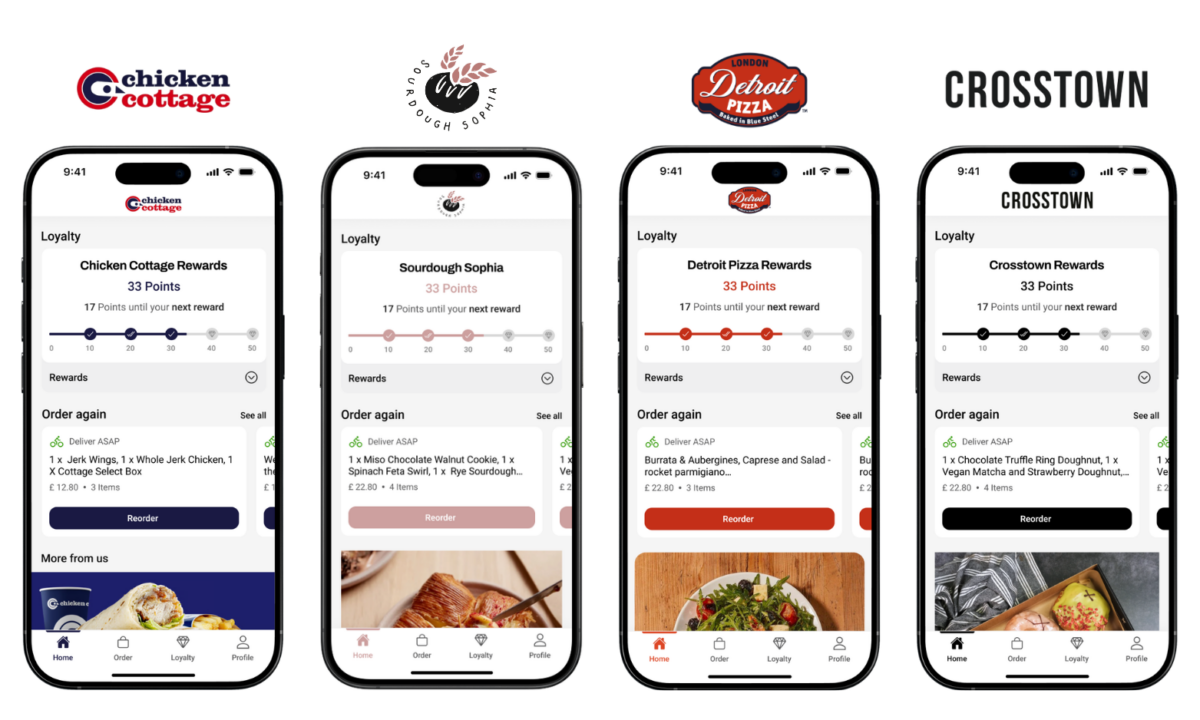
A well-run loyalty program is one of the highest-ROI activities a restaurant can invest in. Every repeat order earned through loyalty costs a fraction of acquiring a new customer through paid ads or marketplace discounts, and the rewards compound over time as customer lifetime value grows. This guide walks through how to set up a restaurant loyalty program properly in 2026, from choosing the right reward model to launching it through your direct ordering channel.
What Is a Restaurant Loyalty Program?
A restaurant loyalty program is a structured system that rewards repeat customers for ordering with you, typically through points, stamps, or tiered benefits. Modern loyalty programs are digital, tied to your direct ordering channel, and built to capture customer data that powers retention marketing. Done well, they turn occasional visitors into regulars and regulars into advocates. Below, we walk through the setup process step by step.
1. Decide Between a Points-Based or Stamp-Based Reward Model
The first decision is the structure of your reward. The two models that consistently work for independent restaurants and small chains are points-based and stamp-based loyalty cards. Each has a clear use case, and many operators run both side by side.
- Stamp-based cards work like a traditional coffee shop card, such as buy 9 coffees and get the 10th free
- Points-based cards reward customers based on what they spend, for example 1 point per £1 spent, with a reward unlocked at a set threshold
- Tiered “airline-style” schemes generally don’t suit smaller businesses, as cards where customers climb to a single reward perform considerably better
If you sell a hero product that customers buy repeatedly, like coffee or a signature dish, stamps are the simpler choice. If your menu is broader and average order values vary, points are usually a better fit.
2. Choose What the Reward Actually Is
A loyalty program is only as compelling as the reward at the end of it. The reward needs to feel meaningful to the customer without eroding your margin. Most successful restaurant loyalty programs offer one of three reward types, and the best choice depends on your menu economics.
- A free item, such as a free coffee, side, or signature product
- A percentage discount off the next order, such as 20% off
- A fixed amount off in pounds, such as £5 off
Customers can’t collect tokens to spend like cash, so the reward needs to be defined upfront as one of these formats. Free-item rewards generally feel more generous than equivalent-value discounts, because customers value a “free” thing more than a few pounds saved.
3. Set Up Multiple Cards for Different Goals
There is no hard limit on the number of loyalty cards you can run, but more than one or two simultaneously can confuse customers more than it motivates them. The best approach is to keep one core card running permanently and layer in seasonal or campaign-specific cards as needed.
- A core points-based card that runs year-round and rewards general spend
- A product-specific stamp card for hero items, like a coffee or lunch deal card
- Seasonal campaign cards, such as a summer drinks card or a winter warmer promotion
One trap to avoid: running a points-based card and a product-based stamp card at the same time, where a single qualifying purchase stamps both. A £3 coffee on a points card and a coffee stamp card means the customer earns 3 points and 1 stamp from the same order, which can double up rewards in unintended ways. Plan your card mix carefully to avoid overlap.
4. Add Loyalty Bonuses to Drive Sign-Ups and First Orders
Loyalty bonuses are one-off point or stamp boosts customers earn for taking a specific action. They’re particularly powerful at the start of the customer journey, where they create the initial momentum that gets someone to engage with your loyalty program in the first place.
- Give bonus points for creating an account, which removes friction from the sign-up step
- Give bonus points or stamps for placing a first order, which reduces drop-off after sign-up
- Use bonuses to relaunch dormant customers with a one-time boost on their next order
Account creation is a meaningful ask, customers are giving you their data and consent to communicate with them, so a bonus that recognises that exchange usually pays for itself many times over in retained customers.
5. Enable Both Online and In-Store Earning
Customers will only stay engaged with a loyalty program if they can earn rewards wherever they interact with your brand. That means online ordering and in-store visits should both count, and the system should handle the bridge between them automatically.
- Online orders trigger points or stamps automatically when a logged-in customer checks out
- In-store customers can scan a QR code at the venue to collect points or stamps
- Alternatively, staff can scan the customer’s own QR code from the till for the same outcome
In-store QR scanning requires the customer to have your branded app installed, as that’s where their digital loyalty card lives. This is a strong reason to encourage app downloads at the till, as the app becomes both the loyalty wallet and the future ordering channel.
6. Protect the Program with Time-Limited QR Codes
In-store QR codes are convenient, but a static code stuck to a wall can be photographed, shared, and scanned by people who never visited the venue. Time-to-live (TTL) QR codes solve this by refreshing on a set interval, so a screenshot becomes worthless within minutes.
- TTL QR codes refresh automatically on a schedule you set
- Customers must scan the live code in person to earn the reward
- Fraud from shared screenshots and social posts is reduced significantly
For high-volume venues, this small configuration step is the difference between a loyalty program that rewards genuine customers and one that quietly leaks margin to opportunists.
7. Set Expiration Dates on Unused Rewards
Rewards that never expire become a long-term liability on your business. They sit in customer accounts indefinitely, distort future redemption forecasts, and can create awkward conversations when a customer turns up months later expecting to claim something you’d long forgotten about.
- Set a clear expiration window, such as 30, 60, or 90 days from when a reward is earned
- Communicate expiry clearly in the customer’s loyalty card view
- Use expiry as a marketing trigger, with a reminder email or push notification before the reward lapses
An expiring reward is also a behavioural nudge. A customer who knows they have a free coffee waiting for them, but only for the next 14 days, is far more likely to walk through the door than one with no deadline at all.
8. Use Exclusive Cards for VIP and Segmented Customers
Not every loyalty card needs to be visible to every customer. Exclusive cards are only shown to selected customers, which makes them ideal for VIP rewards, partnership campaigns, or testing new offers with a small audience before rolling them out widely.
- Reward your highest-spending customers with an exclusive card they didn’t have to ask for
- Run a partner promotion, such as a card unlocked for members of a local club or company
- Test a new reward structure with a small group before deciding whether to roll it out
Exclusive cards also let you do small acts of generosity that feel disproportionately valuable. A handwritten note paired with a hidden loyalty card is the kind of moment customers actually tell their friends about.
9. Make Sure Customers Have to Log In
Customers must be logged in to earn loyalty points or stamps, which is a deliberate design choice rather than a limitation. Logged-in orders are the foundation of every retention activity that follows, and a loyalty program that allows guest checkout is one that hands away its own data.
- Logged-in orders capture name, email, and order history against a single customer record
- That record is the unit of measurement for retention, frequency, and lifetime value
- Without a login, a returning customer looks like a new one, and your data becomes meaningless
If you’ve ever run a loyalty card and wondered why the numbers don’t add up, the answer is usually that a meaningful portion of your customers never created an account. A well-designed direct ordering experience makes account creation feel like a benefit, not a friction.
10. Use the Data to Run Retention Campaigns
A loyalty program is not just a rewards mechanism. It’s the engine for almost every retention activity a restaurant runs, because it links every order to a known customer with a known history. The operators who build retention campaigns on top of their loyalty data outperform those who treat loyalty as a standalone feature.
- Identify your highest-value customers and reward them directly
- Find customers who haven’t ordered in 60 days and trigger a win-back campaign
- Segment by order pattern, such as lunch-only or weekend-only, and tailor your messaging
Loyalty data collected through Slerp orders feeds directly into the Slerp CRM, where you can build segments, run automations, and trigger targeted campaigns. Every order becomes long-term marketing infrastructure rather than a single transaction.
How to Launch Your Loyalty Program Successfully
Setting up the program is the easy part. Launching it well, so customers actually engage from day one, is what separates a loyalty program that drives real revenue from one that quietly sits in the background. A successful launch is structured, communicated, and measured.
- Soft-launch to existing customers first, with a sign-up bonus to drive immediate adoption
- Train your in-store team so every customer at the till hears about the program
- Promote the program across your website, app, social channels, and post-order emails
- Review redemption rates monthly and adjust thresholds if customers aren’t reaching rewards
- Layer in seasonal campaigns to keep the program feeling fresh throughout the year
Slerp gives you everything you need to run a digital loyalty program for your restaurant, with points and stamp cards, in-store QR scanning, loyalty bonuses, exclusive cards, expiring rewards, and full integration with the Slerp CRM, all commission-free and tied directly to your branded ordering channel.
Want to see how Slerp Loyalty would work for your restaurant? Book a demo with Slerp today.
Frequently asked questions
What's the difference between a points-based and stamp-based loyalty card?
A points-based card rewards customers based on what they spend, such as 1 point per £1, with a reward unlocked at a set threshold. A stamp-based card works like a traditional coffee shop card, such as buy 9 coffees and get the 10th free. Points cards suit broader menus with varying order values; stamp cards suit hero products bought repeatedly.
How many loyalty cards can a restaurant run at once?
There is no technical limit, but running more than one or two simultaneously tends to confuse customers more than it motivates them. The best approach is one core card running year-round, with seasonal or campaign-specific cards layered in when needed.
Do customers need to be logged in to earn loyalty points?
Yes. Customers must be logged in to earn points or stamps on web and app orders. This is a deliberate design choice, as logged-in orders are the foundation of every retention activity that follows. Guest checkouts can't be tied to a loyalty record.
Can customers collect loyalty points in-store as well as online?
Yes. Online orders trigger points or stamps automatically at checkout for logged-in customers. In-store, customers can either scan a QR code at the venue using your branded app, or show their own QR code for a staff member to scan at the till.
What types of rewards can a restaurant offer through a loyalty program?
Rewards are based on vouchers, not spendable tokens. The three formats available are a free item (such as a free coffee or signature product), a percentage discount off the next order (such as 20% off), or a fixed amount off in pounds (such as £5 off). Customers cannot accumulate tokens to spend like cash.
Can I import customer loyalty data from an existing system?
Yes, provided your current system can export the data as a CSV or JSON file. This lets you migrate from a previous loyalty tool, POS-based program, or paper card system without losing the history you've built up with existing customers.